


Chinese New Year 2026: Importers Have Only a Few Days Left to Place Orders
January is the last chance for companies importing from China to secure deliveries ahead of a prolonged production shutdown. Although the official celebrations of Chinese New Year 2026 will take place from 17 February to 3 March, experts warn that disruptions to supply chains may last as long as 6–8 weeks.
Chinese New Year remains the most important holiday in China, and its impact on global trade extends far beyond the official holiday calendar.
“Importers must be prepared for port congestion and rising freight rates. The final days of January are the deadline for companies that want to avoid multi-week delays,” emphasises Joanna Porath, owner of the customs agency AC Porath.
A Holiday That Paralyzes Global Trade
In 2026, statutory public holidays in China fall between 17 February and 3 March.
“However, companies often forget that the actual downtime in Chinese factories and ports can last between six and eight weeks. This includes not only the holiday period itself, but also the time needed for workers to return from leave and for full production to gradually resume,” explains Joanna Porath.
In practice, this means that importers must prepare for disruptions affecting not only production, but also ocean transport and customs clearance at ports. The last containers are expected to leave Chinese terminals around 10 February.
January Is the Final Wake-Up Call
For Polish companies working with Chinese suppliers, time is working against them. The end of January is the absolute latest point for placing orders that are expected to reach Poland before or shortly after the holiday period.
“Orders for the first quarter of the year should be placed now, in January. Goods must not only be manufactured, but also efficiently loaded and shipped well in advance. Otherwise, importers risk delays lasting several weeks or even having their cargo completely stuck in port until mid- or even late March,” explains the CEO of AC Porath.
Congested Ports and Rising Costs
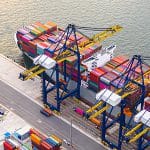
As China continues to function as the ‘factory of the world,’ the period before Chinese New Year always triggers a sharp surge in port traffic. Container terminals operate at full capacity, leading to service delays and a dramatic increase in ocean freight rates.
“During this period, we often see ‘cut-and-run’ policies, where carriers prioritise cargo imported into China while limiting exports to the most profitable shipments. Containers may also remain at transhipment terminals, waiting for weeks for the next vessel,” adds Joanna Porath.
Documentation Is the Key to Success
Amid the pre-holiday shipping rush, careful verification of documentation becomes especially critical. Chinese manufacturers, handling an increased number of orders, have less time for quality control and for ensuring compliance with technical specifications.
“The best strategy is to prepare complete documentation well in advance—both for export clearance in China and for subsequent import clearance in Poland. Strategic supply chain planning that takes into account all constraints resulting from the specifics of Chinese New Year is essential,” the expert concludes.
Companies that fail to place their orders by the end of January must expect their deliveries to arrive no earlier than the second half of March or the beginning of April 2026.


